


From DM Chaos to "I Need My Own Website"
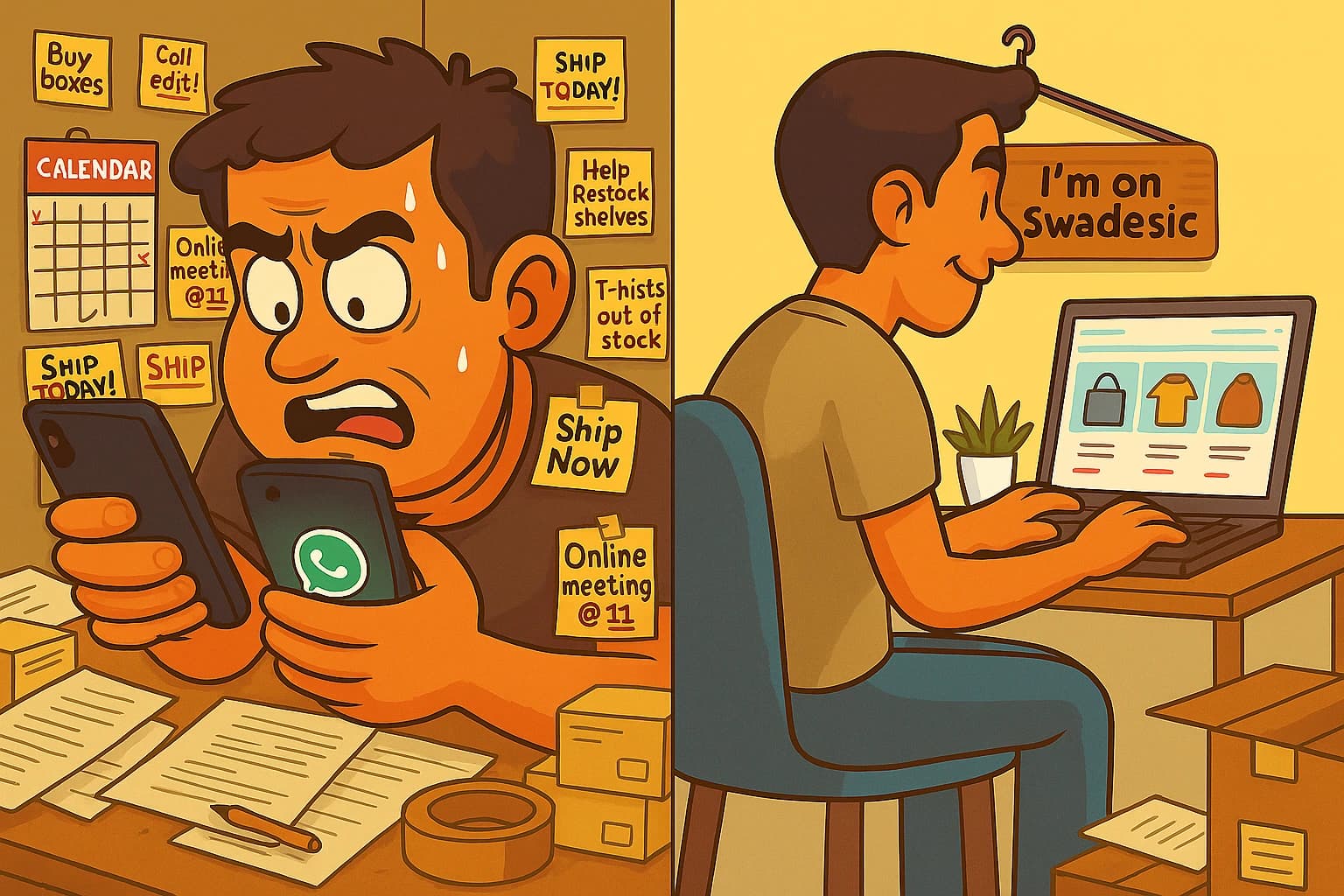
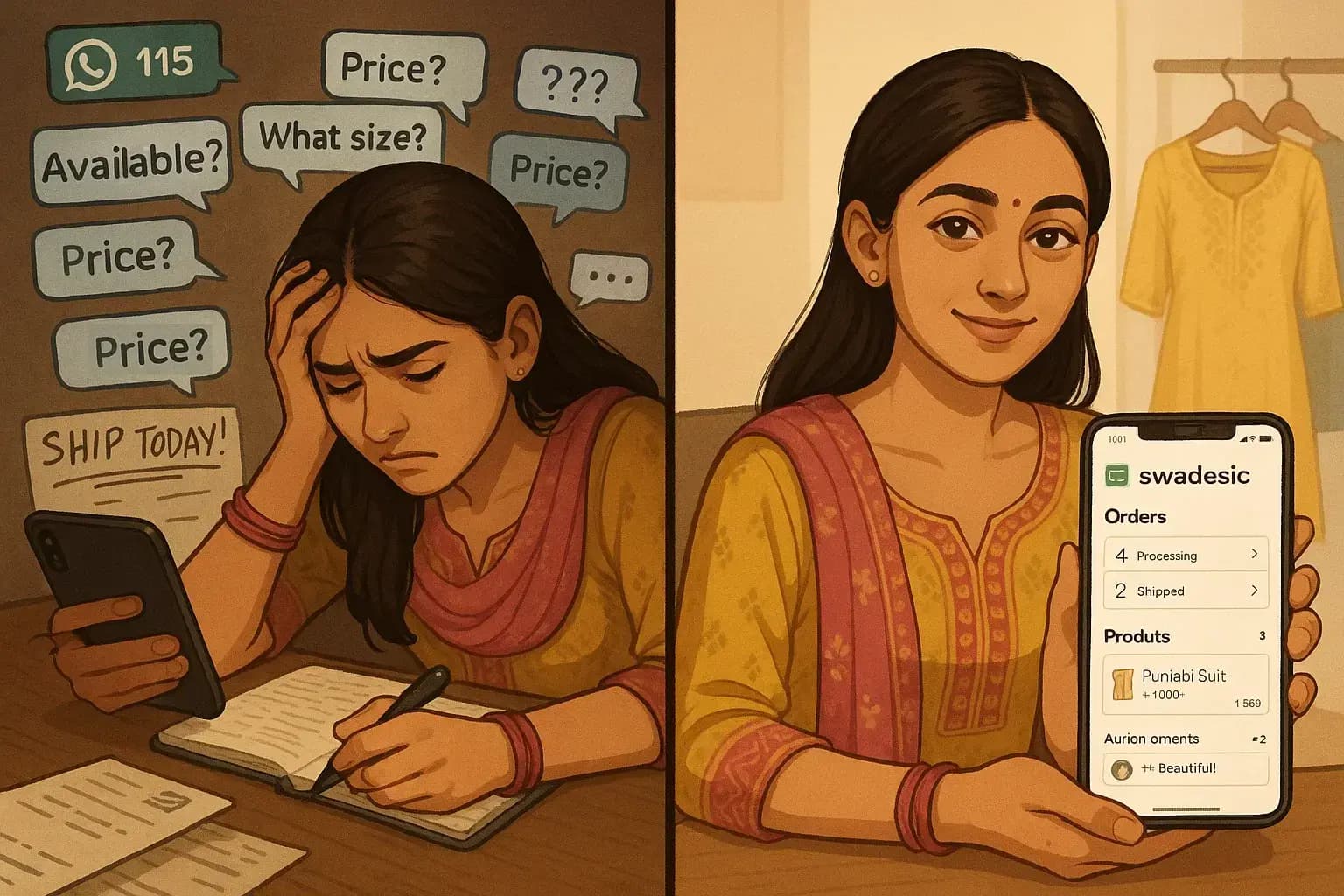
If you started selling on Instagram or WhatsApp, you know the chaos. The same questions come up every single day— "Is this available?", "What's the price?", "Do you deliver to my area?" Payment proofs get lost in chat threads. COD orders become a nightmare to track. And those midnight DMs? They're not going anywhere.
At some point, you think: "A website will fix this."
And honestly? Part of you is right. A website does organize products, structure checkout, and reduce some of those repetitive questions. But here's where it gets uncomfortable.
A website solves order management. It does not solve growth, trust, or network leverage.
That's where most sellers hit a ceiling—and they don't even see it coming.
The Hidden Ceiling of Store Websites
Your website looks professional. The design is clean, products are listed nicely, checkout works. But structurally? It's isolated, seller-controlled, non-networked, and purely transactional. Let me explain what that actually means for your business.
Absolute Control Creates Silent Suspicion
When everything lives on your website, you control the narrative. You decide which reviews show up, you write the refund policy, you choose what buyers see and what they don't. Even if you're 100% genuine and honest, buyers intuitively know this. They think, "This is all curated by the seller."
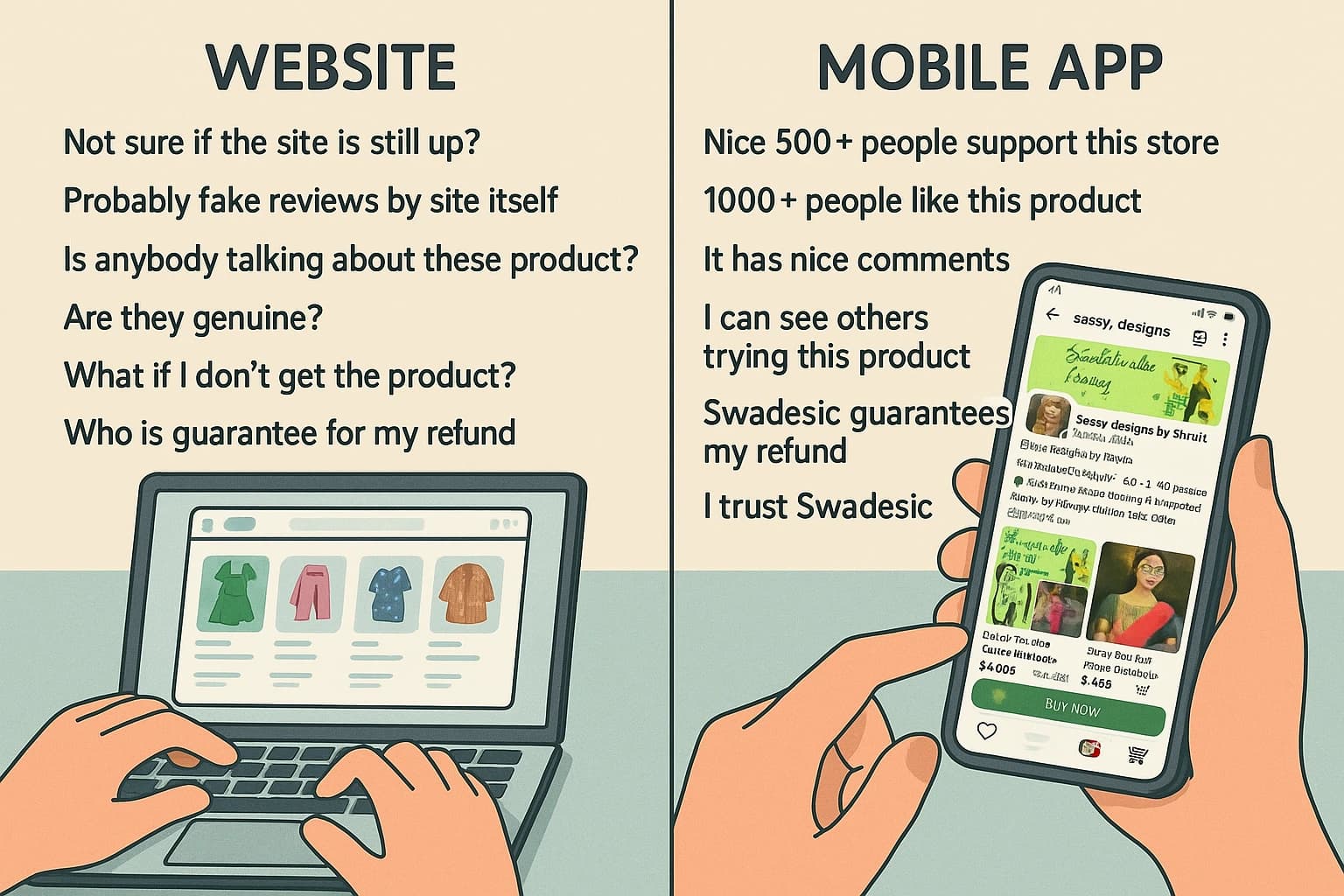
There's no neutral layer. No external verification. Trust becomes something you declare about yourself, not something a system confirms for you. And in 2025, buyers trust systems more than they trust individuals.
No Neutral Dispute Layer
Something goes wrong with an order? Then it's buyer versus seller. There's no structured oversight, no shared accountability, no consequences within an ecosystem. Even if you're an honest seller running a legitimate business, buyers feel unprotected. They're hesitant to pay because they know if things go south, there's no one neutral mediating the situation.
No Network Effects
Your website is a private island. It doesn't connect to anything else. There's no cross-store discovery, no shared buyer ecosystem, no way for buyers to stumble upon you while browsing other stores. The only traffic your website ever sees comes from your Instagram, your WhatsApp, or the ads you pay for.
Stop pushing traffic, and growth stops cold. Websites don't compound. Networks do.
No Portable Reputation
Your reviews live on your domain—and only on your domain. They're not benchmarked against other sellers, not comparable across a broader commerce graph, not visible to anyone outside your website. Change your domain tomorrow, and all that proof of customer satisfaction vanishes. Your reputation doesn't accumulate structurally. It just... sits there.
Buyers Are Just Transactions
Here's what happens on most standalone websites: a buyer lands on your page, adds something to cart, completes checkout, and then... they leave. They gain no status, build no visible loyalty, grow no identity within your ecosystem. There's no progression, no sense of belonging, no reason to come back.
Modern commerce is identity-driven. Websites are transaction-driven. That gap matters.
You Have to Pull Buyers Back Manually
After someone buys from you, what happens? You probably WhatsApp them about new products. Or hope they see your Instagram story. Or send an email they'll never open. Your website does nothing to pull them back. There's no gravity, no built-in reason for them to return. You're fighting for attention against every other brand in their notification feed.
Reviews Feel Curated
Even if every single review on your website is 100% genuine, buyers know the truth: reviews can be filtered, deleted, or curated. They know you control what shows up. Without platform-linked buyer identities—without some external verification that these are real people who really bought things—reviews are just text blocks that could mean anything.
Every Store Looks Different
Every website formats things differently. One store shows reviews one way, another shows them differently. Policies look different. Metrics are displayed differently. Buyers have to decode each store independently, figure out what's legitimate and what's not. That friction adds up. Standardized trust signals would reduce all that hesitation—but standalone websites can't provide that.
No One Finds You By Accident
A website only works when someone intentionally clicks your link. There's no browsing graph, no "people who bought this also looked at," no organic flow from one store to another. Buyers have to already know about you to find you. There's no serendipity, no accidental discovery, no way to be found by someone who wasn't already looking.
Buyers Can't See Social Proof
On a standalone site, a new buyer has no way to see that your store has been around for 2 years, or that 500 people have supported you, or that your customers come back again and again. Those identity layers don't exist. There's no visible proof that you're a trusted, established seller—only whatever you've chosen to display yourself.
Trust Remains Fragile
Even if you've been selling successfully on Instagram for years, new buyers still hesitate. They don't know if your domain is legitimate, whether you'll actually honor refunds, if their order will actually arrive. Domain ownership is private. Refund enforcement is unclear. Delivery reliability is unverified. The trust you built on social media doesn't automatically transfer to a standalone website.
What You Actually Need
You don't need to abandon control of your store. But you do need infrastructure that adds neutral trust, discovery networks, identity progression, standardized transparency, and compounding visibility. That's not a nice-to-have anymore—it's the baseline.
This Is Where Swadesic Changes the Equation
Swadesic is India's direct-from-store shopping network—built specifically for social-first sellers. It gives you everything a website does (products, checkout, orders) but wraps it in a layer that standalone websites simply cannot provide.
It's not a marketplace. It's not a template builder. It's a direct-from-store commerce network that works alongside your Instagram and WhatsApp. That difference changes everything.
Your Store, With System-Backed Trust
When you list your store on Swadesic, buyers see a Store Card with your verified information. The Trust Center shows PAN/GST verification. They can see exactly how many people support your store, your sales history, your ratings, your reviews. Trust becomes system-backed—not something you claim about yourself, but something a platform confirms.
Four Ways to Sell
Swadesic gives you four ordering methods to match however you actually sell.
Swadesic Checkout is the full online experience—buyers browse, add to cart, pay through secure UPI, cards, or wallets. Payment is protected in escrow until delivery is confirmed.
Pickup from Store lets buyers order online but pick up from your location. No shipping fees, instant fulfillment for local customers.
Instant Cart is perfect for your existing DM customers—create a pre-filled cart with selected products, share the link via WhatsApp or Instagram DM, and they checkout in seconds even if they've never used Swadesic before.
Manual Orders let you record any sale that happened outside Swadesic—via Instagram DM, WhatsApp, phone call, or in-person—into your store for tracking. It's completely free.
Built-In Identity and Retention
Buyers on Swadesic don't just transact and leave. They can support your store, gain levels based on their engagement, and build visible purchase history. There's a store updates group for announcements, restocks, and launches. Loyalty compounds over time. You're not just collecting orders—you're building actual store gravity that pulls buyers back.
Discovery Beyond Your Followers
Swadesic's Discovery Feed shows products and stores across the entire network. Places Feed highlights local momentum and nearby stores. Store Classes (S1-S9) create performance-based visibility that rewards good sellers. You can be found by buyers who never followed you on Instagram—because they're already browsing the network.
Neutral Infrastructure That Reduces Fraud Anxiety
With structured checkout, transparent processes, shared credibility, and real reputation consequences, buyers feel protected even when buying from sellers they don't personally know. This isn't just good for buyers—it's good for honest sellers who constantly lose leads because new buyers are nervous about paying strangers online.
Zero Cost to Start
No monthly subscription. No hidden charges. Manual Orders are completely free. Instant Cart and Swadesic Checkout have payment gateway charges plus a flat handling fee—but that fee disappears if orders cancel, return, fall below ₹500, use store pickup, or happen in the same pincode. You only pay when you make money.
Growth That Compounds
Here's the fundamental difference. When you grow on a website, you grow alone. Every new customer is a new battle. But when you grow on a network, your growth feeds the ecosystem—and the ecosystem feeds you back. That's the compounding loop that standalone websites will never offer.
The Real Shift
Websites gave you control. Marketplaces gave you reach. But modern commerce demands all four: control, trust, identity, and network. That combination simply doesn't exist in standalone websites.
Bottom Line
A website is a tool. A network is infrastructure. Tools organize your business. Infrastructure scales it.
If you already have a website, you don't need to delete it. But if you want reduced buyer hesitation, compounding trust, network-powered discovery, and identity-driven retention—you need more than a domain.
You need a system that works as hard as you do.
Don't just build a store. Build a store that lives inside a commerce network.
That's the difference between selling online and building a durable commerce presence. Swadesic is not a marketplace—it's commerce infrastructure for the next generation of Indian sellers.
Launch your store for free in under 2 minutes. No approvals. No coding. No monthly fees. Manual Orders are free—you only pay a flat handling fee when you use online checkout.
Swadesic is available for Android. If you're on iPhone, use our full-featured web app at swadesic.com.